
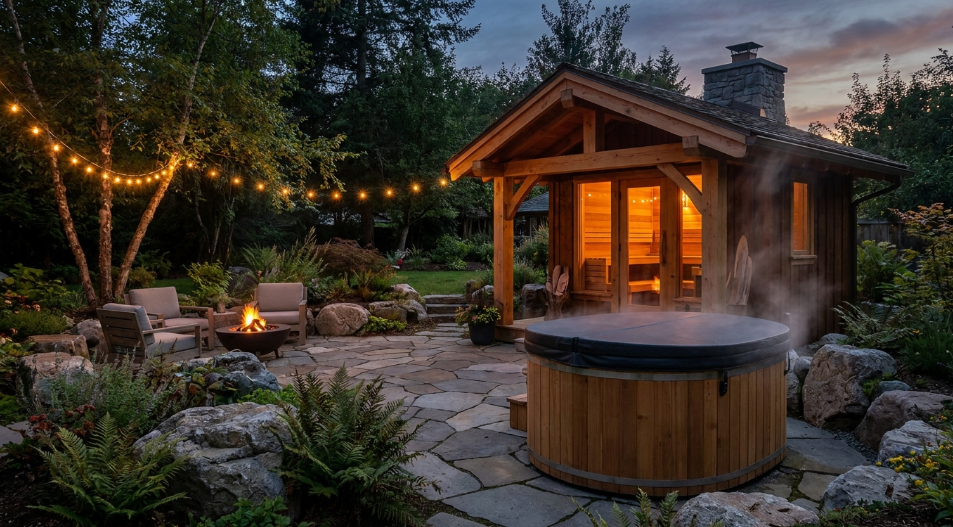
What to Look for When Buying an Outdoor Sauna in 2026
An outdoor sauna needs weather-rated exterior wood or siding, a level gravel or concrete base that keeps the floor off standing moisture, an outdoor-rated electrical circuit with GFCI protection, and enough clearance from the property line to satisfy local setback rules. Skipping any of these four turns a straightforward backyard purchase into a repair project within a season or two, since an outdoor unit deals with rain, snow, sun, and temperature swings that an indoor cabin never has to handle.
Does the Exterior Wood Need to Be Weather-Rated?
Yes, and this is the detail budget listings skip most often. The interior of a sauna stays bare and untreated on purpose, but the exterior-facing wood needs a weather-rated finish, either a penetrating oil-based sealant or an exterior-grade stain, to hold up against rain, UV exposure, and freeze-thaw cycles. Cedar and thermally modified wood both resist rot reasonably well untreated, but even those species last considerably longer with a proper exterior finish reapplied every one to three years depending on climate. A listing that does not mention an exterior finish at all is worth a direct question before ordering.
What Kind of Base Does an Outdoor Unit Actually Need?
A level, well-draining base matters more outdoors than almost any other single factor. Gravel over a compacted sub-base is the most common and least expensive option, typically $300 to $800 installed for a small to mid-size unit, and it drains well enough to keep the sauna floor from sitting in standing water after heavy rain. Pavers or a poured concrete pad cost more but offer a flatter, more permanent surface, useful in areas with heavy snow load or soft, poorly draining soil. Setting a sauna directly on grass or bare dirt is the one option to avoid entirely, since it invites rot and uneven settling within a few seasons.
Does Outdoor Wiring Really Need to Be Different?
Yes, meaningfully so. An outdoor sauna heater still needs the same dedicated 240-volt circuit a comparable indoor unit would, but the components have to be rated for exterior exposure: weatherproof in-use covers over any outlet or junction box, GFCI protection, and conduit rated for burial or outdoor mounting depending on the run. This is licensed electrician work in essentially every jurisdiction, and the added weatherproofing typically pushes an outdoor circuit toward the higher end of a $1,000 to $2,500 range once trenching and distance from the panel are factored in.
How Close to the House or Property Line Can It Sit?
Local zoning and setback rules vary by city and county, but many jurisdictions require a minimum distance, commonly five to ten feet, between an accessory structure like a sauna and the property line, with different thresholds for units over a certain square footage or height. Some areas also regulate distance from the house itself for fire or utility clearance reasons. Checking local rules before ordering, not after delivery, is the step that prevents an expensive relocation once a sauna is already sitting on the wrong spot of the lot.
Does Snow Load Change What You Should Buy?
In regions with real winter snowfall, roof design becomes a genuine buying consideration rather than a cosmetic one. A steeper pitched roof sheds snow more effectively than a flat or barely sloped one, reducing the load the structure has to bear through the season. Buyers in snow-heavy climates should also confirm the base can handle seasonal freeze-thaw cycling without shifting, which is one more reason a properly compacted gravel base or a poured pad outperforms a thin layer of loose stone in colder regions. Cabins from established outdoor-rated makers list roof pitch and load rating on the product page, and comparing that detail across a few listings, including SweatDecks saunas, before ordering is worth the ten minutes it takes.
Should the Door Face Away From Prevailing Wind?
It is a small detail with a real effect on comfort. A door and any windows facing straight into a property’s prevailing wind direction lose heat faster every time the door opens and let driving rain or snow collect against the entry more than a sheltered orientation would. Positioning the unit so the door faces away from the dominant wind, or is at least partially shielded by the house, a fence, or landscaping, keeps the entry area drier and reduces how hard the heater has to work to recover temperature after each use.
What Hardware Should Be Rated for Outdoor Use?
Every metal component visible from outside the cabin, hinges, handles, latches, and any exposed fasteners, should be stainless steel or another corrosion-resistant material rated for continuous outdoor exposure. Standard zinc-plated hardware, common on lower-cost indoor-oriented kits, tends to rust within a season or two once it is exposed to rain and humidity year-round. Checking hardware material specifically, not just wood species, is one of the easier ways to spot a unit that was actually engineered for outdoor placement versus one adapted from an indoor design without much changed beyond the marketing copy.
What Does the Research Say About Outdoor Heat and Cold Exposure?
A physiology review on the effects of heat and cold, with a specific focus on Finnish sauna bathing, lays out how the body handles the temperature swing between a hot sauna and cold outdoor air, a pattern that outdoor sauna owners experience literally every time they step outside between rounds. A separate review in Mayo Clinic Proceedings associates regular sauna use with favorable cardiovascular measures, based on populations who, in the Finnish tradition this research largely comes from, are moving between a hot cabin and cold outdoor conditions as a matter of course. None of this is a reason to buy an outdoor unit over an indoor one specifically, but it is useful context for a purchase that inherently involves more exposure to outdoor temperature swings than an indoor cabin does.
Frequently Asked Questions
Does an outdoor sauna need a special exterior finish? Yes. Exterior wood should be sealed or stained with a weather-rated finish and reapplied every one to three years depending on climate and sun exposure.
Can an outdoor sauna sit directly on grass or dirt? No. A level base of gravel, pavers, or concrete keeps the floor off standing moisture and prevents uneven settling.
Does outdoor wiring need to be different? Yes. It needs weatherproof covers, GFCI protection, and conduit rated for exterior or buried use, which is licensed electrician work.
How far from the house should it sit? Local setback rules vary, but many require five to ten feet from property lines for a small accessory structure. Check local zoning before ordering.
References
- Effects of heat and cold on health, with special reference to Finnish sauna bathing, American Journal of Physiology – Regulatory, Integrative and Comparative Physiology, 2018.
- Does the Combination of Finnish Sauna Bathing and Other Lifestyle Factors Confer Additional Health Benefits? A Review of the Evidence, Mayo Clinic Proceedings, 2023.
- Cardiovascular and Other Health Benefits of Sauna Bathing: A Review of the Evidence, Mayo Clinic Proceedings, 2018.